

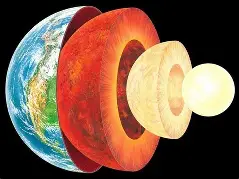

What Is the Earth’s Crust?
The Earth is surrounded by a crust, or shell. The Earth’s crust is the thin, solid, outer shell of the Earth. It is the realm in which humans reside, mountain ranges form, oceans are found, and many geological processes occur. The crust is the only part of Earth with which you are familiar, but in comparison to the size of the Earth, it is extremely thin.
The Earth’s crust is composed of rocks and minerals and constitutes the outer part of the Earth’s structure. The mantle is very thick and hot beneath the crust. To know about is to know how mountains and continents are formed, how ocean basins are formed, and about earthquakes and volcanoes.
Where Is the Earth’s Crust?
The outermost layer of the Earth is called the Earth’s crust. It is found above the mantle and stretches from the Earth’s surface down to a point at depth called the Todorovic discontinuity, or Moho.
Not all of the crust is created equal. It tends to be generally much thicker under continents than under oceans.
The thickness of continental crust is 30–70 km, and oceanic crust is about 5–10 km thick. The thickness of the crust is very small when compared with the radius of the Earth (6,371 km).
There are two main types of Earth’s crust: oceanic and continental.
There is thought to consist of two primary types: continental crust and oceanic crust.
Continental Crust
Continental crust forms the continents and some areas near their edges. As a rule, it is thicker and less dense than oceanic crust.
The rock types are varied, such as granite and other silica- and aluminum-rich rocks. Some parts of continental crust are extremely old and contain rocks that formed billions of years ago.
The continental crust is the base of mountains, plains, deserts, forests, cities, and other places where humans live.
Oceanic Crust
Most of the world’s oceans have oceanic crust as their floor. It is thinner and denser than continental crust.
Dark volcanic rocks, like basalt, are the predominant rocks in oceanic crust. Underwater mountain ranges, called mid-ocean ridges, can form new oceanic crust when magma flows up from beneath the Earth’s surface and cools.
Old oceanic crust is continually recycled back into the Earth’s interior at subduction zones, so oceanic crust in general tends to be younger than the oldest continental rocks.
What Makes Up the Earth’s Crust?
A variety of rocks and minerals make. Its composition is different in continental and oceanic crust.
The crust is composed of oxygen, silicon, aluminum, iron, calcium, sodium, potassium, and magnesium.
These combine to make minerals. Rocks are then created by different minerals coming together.
Quartz and feldspar are common minerals in many continental rocks, for example. Common in oceanic crust, basalt is a rock with iron- and magnesium-rich minerals.
How Was the Earth’s Crust Created?
The Earth’s crust formed when the Earth cooled after its creation over 4.5 billion years ago.
The early Earth had a hotter temperature than the Earth has now. Slow cooling of the planet resulted in the solidification of materials at the surface as an early crust.
Geological processes over billions of years continue to change and recycle the Earth’s crust. Volcanic activity created new rocks, and surface changes occurred due to erosion, tectonic movement, and other processes.
Hence, the crust as seen today is due to a very long geological history.
It’s a Rock ‘n’ Roller Ride on Earth’s Crust and Tectonic Plates!
Tectonic plates are very closely connected to the Earth’s crust. The crust and the stiff upper part of the mantle are considered the lithosphere.
Tectonic plates are made up of large and small plates. These plates ride atop a softer layer below them known as the asthenosphere, and they move at a slow rate.
The movement is typically a few centimeters a year but over millions of years can cause significant changes.
Tectonic plates can collide, move away from each other, or slide past each other. These motions can trigger earthquakes, form mountains, and help produce volcanic activity.
How Is the Earth’s Crust Changing?
The Earth’s crust is constantly changing. Some changes may take a long time, and some changes may occur quickly.
Erosion involves the removal and transport of material from one area to another. Erosion of the Earth’s surface can occur through rivers, wind, glaciers, waves, and rainfall.
Volcanoes can form additional rocks on the Earth’s surface. Earthquakes can suddenly fracture and shift pieces of the crust.
Some places gain new crust, and some lose and/or recycle older crust as a result of plate movements.
These processes actively interact to continually modify Earth’s surface.
What Are the Important Things About the Earth’s Crust?
The Earth’s crust is very significant because it is the surface of the Earth on which life exists.
Humans constructed housing, roads, cities, farms, and other structures on this crust. Soils are formed by the weathering of rocks and organic material in which plants grow. The crust itself has a high concentration of natural resources that are worthwhile.
Valuable minerals and metals such as iron, copper, gold, and more exist below the Earth’s crust. It is also possible to store groundwater in rocks and sediments below ground level.
The study of the crust contributes to knowledge about the location of resources, as well as about changes in the Earth’s surface over time.
The Earth’s Crust and Natural Hazards
Numerous natural hazards are associated with processes in or below the Earth’s crust.
Faults are areas where rocks can suddenly move, causing earthquakes. Volcanism can happen when magma percolates through weaknesses and makes its way to the surface.
The surface of the crust can also be impacted by landslides, especially in steeply sloping regions, areas with intense rain, earthquake activity, or poor rocks.
Scientific study of the Earth’s crust can help us understand these processes and determine where on Earth they could pose a hazard.
Conclusion
There is the thin, solid, outermost layer of our planet. It can be distinguished into two types: continental and oceanic, which vary in thickness, composition, and geological features.
The crust is relatively thin, but it has a very significant effect on the Earth’s surface and life on Earth. Changes in it are caused by tectonic, volcanic, erosional, earthquake, and other geological movements.
, scientists can find out more about the structure of the Earth, how Earth’s geology has evolved, and about natural resources and the forces that formed Earth. This solid, stable surface that is seen is that of an ever-changing planet born billions of years ago.

Comments are closed.
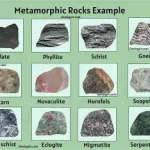
[…] may be light-colored, soft, or made of visible layers. Although rocks may look simply, they contain important clues about the history and structure of our […]