

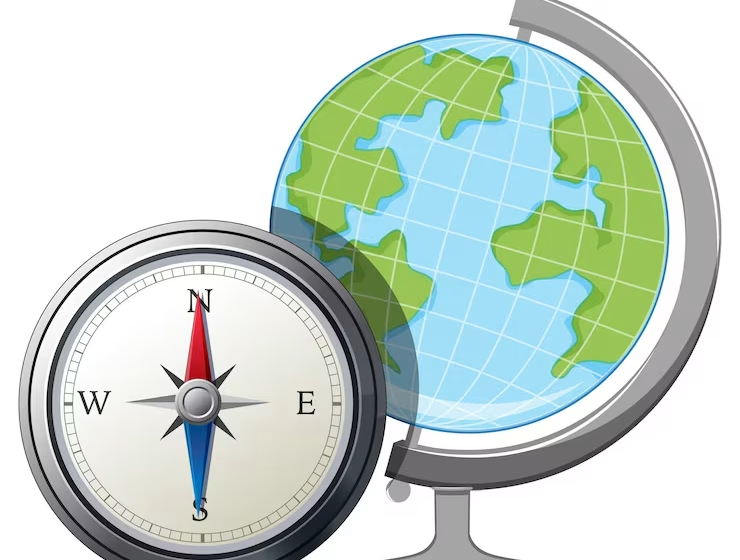

Geography: Understanding the World Around Us
Geo is the study of Earth, its physical features, people, places, environments, and the relationship between humans and nature. It helps us understand how mountains, rivers, oceans, climates, cities, and communities shape the world we live in. Learning geography is important for students and anyone who wants to better understand our planet.
What Is Geo?
Geography is a subject that explores Earth’s physical and human characteristics. It is generally divided into two major areas: physical geography and human geography.
Physical geography focuses on natural features and processes, including mountains, rivers, oceans, deserts, weather, climate, soil, and ecosystems. Human geography studies people and their activities, including population, migration, culture, settlements, agriculture, transportation, and urban development.
Why Is Geo Important?
Geography helps us understand the connection between people and their environment. It provides valuable knowledge about natural resources, climate change, population growth, pollution, and natural disasters.
Geographic knowledge is also useful for city planning, agriculture, transportation, environmental protection, and disaster management. For students, studying geography can improve map-reading, research, observation, and critical-thinking skills.
Branches of Geography
There are several important branches of geography. Physical geography examines Earth’s natural systems, while human geography focuses on societies and human activities. Other branches include environmental geography, economic geography, political geography, cultural geography, and urban geography.
Modern geography also uses technology such as Geographic Information Systems (GIS), satellite imagery, GPS, and digital maps. These technologies help experts collect, analyze, and visualize geographic information.
Geography and Everyday Life
Geo affects our everyday lives in many ways. The climate influences what people wear and grow, while location affects transportation, trade, housing, and economic activities. Geography can also help us understand why populations are concentrated in certain areas and how cities develop over time.
Conclusion
Geography is more than memorizing countries, capitals, and maps. It is a fascinating field that helps us understand Earth and the relationship between people and their surroundings. By studying geography, we can better understand environmental challenges, cultural diversity, natural resources, and the changing world around us.

Comments are closed.
[…] also influence weather and climate. They can force moist air upward, causing rainfall on one side of a mountain range while creating drier conditions on the other […]