
Volcano: Nature’s Powerful and Mysterious Force
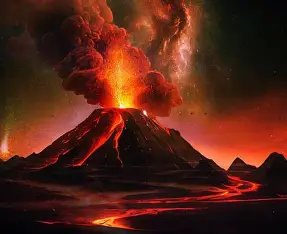
A volcano is one of the most fascinating natural features on Earth. It is an opening in the Earth’s crust through which hot molten rock, ash, and gases can escape from deep inside the planet. Volcanoes have shaped landscapes, created islands, and influenced the environment for millions of years. Although volcanic eruptions can be dangerous, volcanoes also play an important role in the natural development of our planet.
How Does a Volcano Form?
Deep beneath the Earth’s surface, temperatures are extremely high. Some rocks melt and form a hot, liquid substance called magma. When pressure builds underground, magma can move upward through cracks in the Earth’s crust. If it reaches the surface, it is called lava. Repeated eruptions can gradually build a volcanic mountain around the opening.
Volcanoes are commonly found near the boundaries of tectonic plates. These huge pieces of the Earth’s crust are constantly moving. Their movement can create conditions that allow magma to rise toward the surface.
Types of Volcanoes
There are several types of volcanoes. Shield volcanoes have wide, gentle slopes and usually produce flowing lava. Composite volcanoes, also called stratovolcanoes, are tall and steep and can produce powerful eruptions. Cinder cone volcanoes are generally smaller and are formed from volcanic rocks and ash.
Scientists also classify volcanoes as active, dormant, or extinct. An active volcano has erupted recently or may erupt again. A dormant volcano is currently quiet but could become active in the future. An extinct volcano is not expected to erupt again.
Why Are Volcanoes Important?
Volcanoes can be destructive, but they also provide important benefits. Volcanic ash and lava can create nutrient-rich soil that supports agriculture. Volcanic activity can also form new land and islands. In addition, heat from underground volcanic areas can be used to produce geothermal energy, a renewable source of power.
Conclusion
Volcanoes are a remarkable part of Earth’s natural system. They remind us that our planet is constantly changing beneath our feet. By studying volcanoes, scientists can better understand Earth’s interior and help communities prepare for possible eruptions. From spectacular mountains to powerful lava flows, volcanoes remain one of nature’s most impressive forces.