


How Did Human Settlements Develop? The Story of Where People Live
How Did Human Settlements Develop? Geography is one of the essential aspects of human settlements. Settlements illustrate how humans have shaped the use of land, water, and natural resources in their surroundings to create communities. The form of human settlements has undergone significant transformation, from early human groups to the large modern cities of today, over thousands of years.
Yet how did human settlements get started? The answer is closely related to food, water, climate, transportation, trade, and land characteristics.
What Is a Human Settlement?
Human settlements are places where people live and carry out their activities. A settlement may be a small village, a town, a city, or a large metropolitan area.
The range in the size of settlements can be quite large. Some villages consist of just a handful of families, while a large city can have millions of people. But even with these differences, all settlements grow because there are reasons why people want to live in a certain place.
In many cases, these choices are made because of natural resources or economic opportunities.
Early Human Settlements
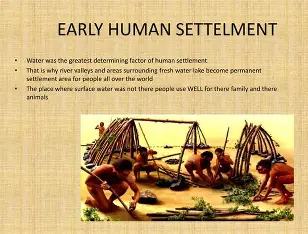
Early humans were nomadic and would wander around looking for food and water. How Did Human Settlements Develop? Hunting, fishing, and collecting wild plants were important sources of food for many groups. Their diet was influenced by the seasons, and they were sometimes nomadic groups.
This pattern was altered by the development of agriculture.
Farmers who learned to cultivate crops and domesticate animals were able to develop a consistent food supply. They no longer had to move about constantly in search of food. Instead, groups began to live in permanent settlements.
The introduction of this change was one of the most significant developments in human civilization.
Why Did People Settle Near Rivers?
Early settlements were located along rivers. Rivers provided fresh water for animals, fish, and fields.How Did Human Settlements Develop?
River valleys were also likely to have fertile soil. Flooding could create agricultural land with nutrients that were deposited on the land regularly.
Rivers were also a means of transport. People could move from one place to another via waterways and interact with people in other communities through trade.
Some of the earliest civilizations arose along the great rivers of the world. These included settlements in the Nile, Tigris and Euphrates, Indus, and Yellow River systems.
The Process of Villages Growing
Small permanent settlements began to develop as agriculture was established.
Farmers built dwelling houses near their farms. They stored crops and raised animals. As time passed, people began to have various occupations. Some turned to crafts, commerce, architecture, or religion.
This specialization led to the organization of settlements.
Villages could further join hands in the construction of irrigation systems, roadways, storage facilities, and defenses. Some villages began to grow and become more complex as their populations grew.
From Villages to Towns
Trade was one of the factors that led to the development of towns.
Farmers farmed, and craftspeople made tools, clothing, pottery, and more. Traders facilitated links between peoples and traded items.
Communities located close to major highways, rivers, ports, or natural resources tended to be more populous.
These were the sites of markets. Growing trade led to a growth in businesses and services. A settlement could then develop from a small village into a busy town.
The Evolution of Cities
Some of these towns turned into cities. Urban development was caused by population, trade, government, industry, and cultural activities.
Urbanization led to the concentration of political power and economic activity in cities. Governments built administrative centers, and traders established markets and trading systems.
Cities also drew people seeking employment and improved economic prospects.
In many parts of the world, the Industrial Revolution spurred the pace of urbanization. Factories provided new employment opportunities; many people left rural areas to take up new jobs in towns and cities.
Geographical Knowledge: Physical Geography and Human Settlements
Settlements are greatly affected by the physical surroundings.
People tend to gravitate toward areas where they have access to the things they need and can build a house safely. Construction and farming may be easier if the land is flat or has a slight incline. Households and agriculture can be provided with water sources.
Climate also matters. Permanent settlement may be more difficult in environments that are extremely cold, hot, dry, or mountainous, but humans have adapted themselves to many harsh environments.
Natural hazards can also be a factor affecting settlement. Flooded, earthquake, landslide, or extremely storm-prone zones may require special planning and construction techniques.
Transportation and Modern Settlements
Transportation is becoming more critical in the development of settlements.
Communities are linked to each other, and roads, railways, airports, and ports facilitate the transport of people and products. Businesses and investment in settlements are possible when they are near large transportation systems.
Towns, for instance, will develop around railway stations or highways, ports, or industrial areas.
Digital communication also affects the location of employment and residence today. Physical geography is still relevant, but numerous things have been modified by technology.
So, Why Do Modern Cities Continue to Grow?
To this day, people are still drawn to modern cities for various reasons. Cities can offer employment, schooling, health care, travel, entertainment, and all other amenities.
As the population grows, an area may change, and new houses, roads, schools, shops, or businesses may be built. This can help to increase additional growth.
But rapid urban expansion can also pose problems. Traffic, pollution, housing, and waste are conditions that can potentially affect cities, as well as scarce resources like water.
Appropriate urban planning can assist in controlling this increase.
Conclusion
So what was the process of the development of human settlements? Human settlements gradually evolved as people learned to adjust to their surroundings and find more favorable means of acquiring food, water, shelter, and other necessities.
The invention of agriculture enabled many people to live in permanent settlements. As the population grew, villages evolved, and some became towns and cities as a result of trading. Later, industry and transportation spurred city growth.
All present human settlements vary from small rural villages to very large cities today. Their locations and development continue to be a reflection of people, geography, resources, technology, and the environment.

Comments are closed.
[…] what is the effect of cities on the environment? The impact of urban areas on the environment can manifest itself in multiple ways, such as air pollution, water pollution, waste generation, […]