


How Are Mountains Formed? A Complete Guide
How are mountains formed? Mountains are some of the most impressive landforms on Earth. They rise high above the surrounding landscape and can stretch across entire regions. Although mountains may look permanent, they are constantly changing because of geological forces, weather, and erosion.
Most mountains form over millions of years. The main force behind many mountain ranges is the movement of tectonic plates. However, volcanic activity and other natural processes can also create mountains. Understanding these processes helps us learn how Earth’s surface changes over time.
What Are a Mountains?
A mountain is a large natural elevation of Earth’s surface that rises significantly above the land around it. Mountains usually have steep slopes and a summit, although their shapes and sizes vary greatly.
Some mountains stand alone, while others form long chains called mountain ranges. The Himalayas, Andes, Rockies, and Alps are examples of major mountain ranges.
Mountains can contain different types of rocks and may have forests, grasslands, glaciers, or snow-covered peaks depending on their location and elevation.
How Are Mountains Formed by Tectonic Plates?
The movement of tectonic plates is one of the most important reasons mountains forms. Earth’s outer layer is divided into large plates that move slowly over the softer material beneath them.
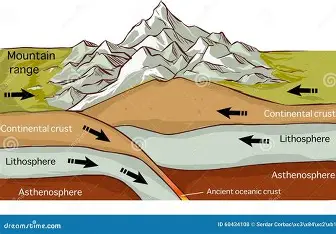
When two continental plates move toward each other, they can collide. Neither plate easily sinks into the mantle because continental crust is relatively light. Instead, the rocks and crust can become compressed, folded, and pushed upward.
Over millions of years, this movement can create enormous mountain ranges.
The Himalayas provide a famous example. The Indian Plate continues to move toward the Eurasian Plate, causing the crust in the region to rise and deform. This process helped create the world’s highest mountain range.
Fold Mountains
Fold mountains form when layers of rock are compressed by tectonic forces. The pressure can cause the rock layers to bend and fold instead of breaking apart.
Over a very long period, these folded layers can rise and form mountains.
Many major mountain ranges around the world are fold mountains. They often have long ridges and complex geological structures because of the intense pressure involved in their formation.
Volcanic Mountains
Not all mountains form from the collision of continents. Some develop through volcanic activity.
Deep inside Earth, molten rock called magma can rise toward the surface. When magma reaches the surface, it becomes lava. Repeated volcanic eruptions can build layers of lava, ash, and other volcanic materials around a volcanic opening.
Over time, these layers can form a mountain.
Mount Fuji in Japan is a well-known example of a volcanic mountain. Other volcanic mountains can be found in many parts of the world, especially near tectonic plate boundaries.
Fault-Block Mountains
Fault-block mountains form when large blocks of Earth’s crust move along faults. A fault is a fracture in the Earth’s crust where rocks can move.
When tectonic forces pull or push the crust, some blocks may rise while others move downward. The raised blocks can become mountain ranges or elevated landforms.
These mountains often have steep slopes and relatively flat or tilted surfaces. Their shape depends on the direction and amount of movement along the faults.
Dome Mountains
Dome mountains form when magma rises beneath the Earth’s surface but does not break through as lava.
The pressure from the magma can push the rock layers above it upward, creating a rounded or dome-like shape. Eventually, erosion removes some of the upper rock layers and exposes the harder rock underneath.
This process can create a mountain that looks different from the sharp peaks commonly associated with large mountain ranges.
The Role of Erosion
Erosion does not usually create mountains, but it plays an important role in shaping them.
Wind, rain, rivers, glaciers, and changes in temperature gradually wear down rocks. Over thousands or millions of years, these forces can carve valleys, cliffs, ridges, and peaks into mountain landscapes.
In some cases, erosion can remove softer rocks while leaving harder rocks behind. This can produce distinctive mountain shapes.
Glaciers are especially powerful in high mountain regions. Moving ice can carve deep valleys and reshape entire landscapes.
Why Do Mountains Change Over Time?
Mountains may appear permanent because they are so large, but they are not static. Geological forces can continue to push some mountains upward while erosion slowly wears them down.
This creates a natural balance between mountain building and mountain destruction.
Tectonic activity can raise new rock, while rivers, glaciers, wind, and weather gradually remove material from the surface. Because these processes happen slowly, major changes may take millions of years to become visible.
Why Are Mountains Important?
Mountains are important for both nature and human life. They provide habitats for many plants and animals and influence local and regional climates.
Mountain areas also store large amounts of freshwater in snow and glaciers. Rivers often begin in mountainous regions and provide water for communities, agriculture, and ecosystems.
Mountains also attract tourists, hikers, climbers, and researchers. Many mountain regions have unique cultures and traditions that have developed over centuries.
Conclusion
So, how are mountains formed? Most mountains develop through powerful geological processes that operate over millions of years. Tectonic plate collisions can fold and push Earth’s crust upward, while volcanic activity can build mountains from layers of lava and ash. Fault movements and rising magma can also create different types of mountain landforms.
At the same time, erosion constantly reshapes these landscapes. Mountains are therefore the result of a long and ongoing interaction between forces that build Earth’s surface and forces that wear it down.
By studying mountains, we can better understand the powerful geological processes that have shaped our planet and continue to change it today.

Comments are closed.
[…] are among the most powerful natural features on our planet. They can create new land, change landscapes, and release gases and minerals from deep within […]