

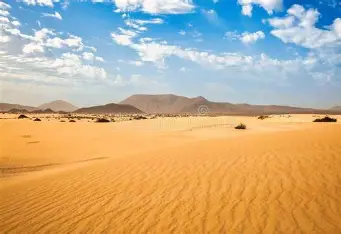

Desert: A Fascinating World of Sand, Life, and Survival
A desert is one of the most fascinating landscapes on Earth. When people think of a desert, they often imagine endless sand dunes, hot sunshine, and a dry environment. However, deserts are much more diverse than they appear. They can be hot or cold, sandy or rocky, and some even receive snow during the winter. Despite having very little rainfall, deserts surprising variety of plants, animals, and human communities.
What Is a Desert?
Because water is scarce, living organisms in these environments must develop special ways to survive.
Deserts are found on every continent. Some are located near the equator, while others exist in very cold parts of the world. Their climates and landscapes can therefore vary greatly. What they have in common is a lack of available moisture.
Types of Desert
Not every desert looks like a huge field of golden sand. There are several major types, including hot, cold, coastal, and semi-arid deserts.
Hot deserts usually have extremely high temperatures during the day and can become surprisingly cold at night. The Sahara Desert in Africa is the largest hot desert in the world and is famous for its enormous sand dunes and dry climate.
Cold deserts have low temperatures and may receive snow or ice. The Gobi Desert in Asia is a well-known example. Coastal deserts are influenced by cold ocean currents and often have very little rainfall. Semi-arid deserts are generally less dry and may support more vegetation than other desert environments.
Life in the Dese
At first glance, deserts may seem almost lifeless, but they are home to many remarkable species. Plants and animals have developed unique adaptations that help them deal with limited water and extreme temperatures.
Cacti are among the best-known desert plants. They can store water in their thick stems and have spines instead of ordinary leaves. Other plants have deep roots that reach underground water, while some survive by remaining dormant until rain arrives.
Animals also have interesting survival strategies. Camels can travel long distances while conserving water and energy. Desert foxes, snakes, lizards, insects, and rodents have adaptations that help them survive heat, cold, and limited food supplies. Many desert animals are active at night when temperatures are lower.
Climate and Temperature
One of the most important characteristics of a desert is its dry climate. Low humidity and limited cloud cover can cause temperatures to change dramatically between day and night.
During the day, sunlight can make the ground extremely hot. After sunset, however, heat can quickly escape into the atmosphere, causing temperatures to fall. In some cold deserts, winter temperatures can drop well below freezing.
Rainfall in these regions is often unpredictable. Some deserts may go months or even years with very little rain. When rainfall finally arrives, it can sometimes come as a powerful storm that causes temporary flooding.
Famous Deserts Around the World
There are many remarkable deserts across the planet. The Sahara covers a large part of North Africa and is famous for its vast landscapes. The Arabian Desert stretches across much of the Arabian Peninsula and contains extensive areas of sand and rocky terrain.
The Gobi Desert extends across parts of Mongolia and China. Unlike the Sahara, it has a colder climate and includes mountains, gravel plains, and rocky landscapes.
The Atacama Desert in South America is known as one of the driest places on Earth. Located mainly in northern Chile, some areas receive extremely little rainfall. Antarctica is also classified as a desert because it receives very little precipitation, even though it is covered with ice.
People and Desert Life
Humans have lived in desert environments for thousands of years. Communities have developed ways to survive by carefully managing water, food, shelter, and transportation.
Nomadic groups traditionally move from one location to another in search of water and grazing areas. In other regions, people have created irrigation systems that allow crops to grow despite limited rainfall. Modern technology has also made it possible to develop cities and agricultural areas in extremely dry regions.
Desert communities have developed unique cultures, traditions, clothing, architecture, and lifestyles that reflect their environment.
Why Deserts Matter
Deserts are important parts of Earth’s natural systems. They contain unique ecosystems and provide habitats for species that cannot survive elsewhere. Their soils and landscapes also contribute to global environmental processes.
Desert regions can contain valuable natural resources, including minerals and sources of renewable energy. Their wide-open landscapes receive strong sunlight, making many desert areas suitable for solar energy projects.
However, deserts are fragile environments. Human activities, climate change, overgrazing, and poor land management can contribute to desertification in vulnerable regions. Protecting water resources and natural habitats is therefore essential.
Conclusion
The desert is far more than a landscape of sand and heat. It is a complex environment filled with life, natural beauty, and remarkable examples of adaptation. From the hot dunes of Africa to the icy wilderness of Antarctica, deserts demonstrate how life can survive under challenging conditions.
Understanding these dry environments helps us appreciate Earth’s incredible diversity. By protecting desert ecosystems and using their resources responsibly, we can help preserve these extraordinary landscapes for future generations.



Comments are closed.
[…] glaciers develop in mountain regions and flow through valleys. They often create dramatic landscapes as they move between mountains. Their movement can carve deep valleys with steep […]