

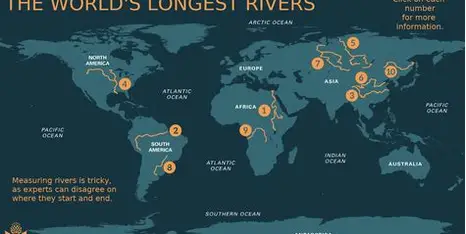

Largest River in the World: The Amazon River
The largest river in the world is a fascinating subject for anyone interested in geography, nature, and the environment. Rivers have shaped civilizations, supported agriculture, provided drinking water, and created habitats for millions of plants and animals. Among the world’s great rivers, the Amazon stands out because of its enormous water flow, vast drainage basin, and incredible biodiversity.
The Amazon River flows through South America and is closely connected with the Amazon rainforest, one of the most important natural ecosystems on Earth. But what makes the Amazon so remarkable, and how does it compare with other major rivers such as the Nile? Let’s explore.
What Is the Largest River in the World?
When people ask about the largest river in the world, the answer depends on how a river is measured. Rivers can be compared by length, water discharge, drainage basin, or the amount of water they carry.
By water discharge, the Amazon is clearly the world’s largest river. It carries more water into the ocean than any other river on Earth. Its enormous flow is one of the main reasons scientists consider it the most powerful river system on the planet.
The Amazon’s drainage basin covers millions of square kilometers and includes parts of several South American countries. This huge basin collects water from countless smaller rivers and streams.
Where Does the Amazon River Flow?
The Amazon River is located in South America and flows generally from west to east before reaching the Atlantic Ocean. Its river system stretches across a vast region, with the majority of its basin located in Brazil.
The river begins in the Andes Mountains, where numerous streams and tributaries combine to form the enormous Amazon system. As it moves eastward, the river grows wider and deeper as it receives water from hundreds of tributaries.
The Amazon eventually reaches the Atlantic Ocean, where its tremendous volume of freshwater enters the sea.
How Long Is the Amazon River?
The exact length of the Amazon River has been debated because determining the river’s true source is complicated. Different studies have produced different measurements.
For many years, the Nile River was commonly recognized as the world’s longest river, while the Amazon was considered the largest by volume. Some research has suggested that the Amazon could potentially be longer than the Nile depending on which source and measurement method are used.
Because of these differences, it is more accurate to describe the Amazon as the world’s river by water discharge rather than relying only on length.
The Amazon River and Its Huge Water Flow
One of the most impressive features of the Amazon is its enormous water discharge. During the rainy season, rainfall across the massive Amazon Basin increases the amount of water flowing through the river system.
Thousands of tributaries contribute to the Amazon. Some of these rivers are themselves enormous waterways. The Rio Negro and the Madeira River are among the major tributaries that add significant amounts of water to the Amazon system.
The river’s huge flow also influences the Atlantic Ocean. Freshwater from the Amazon spreads far into the Atlantic, creating an important connection between the continent’s land environment and the ocean.
Wildlife Around the Amazon River
The Amazon River and its surrounding rainforest support an extraordinary variety of wildlife. The region is home to fish, reptiles, birds, mammals, amphibians, and countless insects.
The river itself contains famous species such as the Amazon River dolphin, giant river otters, piranhas, and enormous freshwater fish. Seasonal flooding creates temporary wetlands and provides food and shelter for many species.
The Amazon rainforest also depends heavily on the river system. Regular flooding helps distribute nutrients across the surrounding ecosystem, supporting plants and animals throughout the basin.
Why Is the Amazon River Important?
The importance of the Amazon extends far beyond its size. It supports local communities, transportation, fishing, agriculture, and many economic activities.
For Indigenous communities and other people living near the river, waterways are essential for transportation and access to food and resources. In areas where roads are limited, boats can provide an important way to travel between communities.
The Amazon Basin is also extremely important for scientific research. Researchers study its forests, rivers, wildlife, and climate to better understand biodiversity and environmental change.
Amazon River vs. Nile River
The Amazon and Nile are often compared because both are among the world’s most famous rivers. The Nile has traditionally been regarded as the longest river, while the Amazon is unquestionably the largest by volume of water.
The Nile flows through northeastern Africa and has played a central role in the development of ancient and modern civilizations. The Amazon, in contrast, is especially known for its enormous drainage basin, powerful flow, and connection with the Amazon rainforest.
Both rivers are geographically and historically significant, but they are remarkable for different reasons.
Threats Facing the Amazon River
Despite its importance, the Amazon River system faces environmental challenges. Deforestation, pollution, mining, habitat destruction, and climate change can affect the health of the river and its surrounding ecosystems.
Changes in rainfall patterns and increasing temperatures may also influence water levels and seasonal flooding. Protecting the Amazon requires cooperation between governments, scientists, local communities, and environmental organizations.
Sustainable development and responsible management of natural resources can help protect this extraordinary river for future generations.
Final Thoughts
The largest river in the world by water discharge is the Amazon River, a massive waterway that supports one of Earth’s richest ecosystems. Its enormous flow, extensive drainage basin, countless tributaries, and remarkable wildlife make it one of the most important rivers on our planet.
Whether you are interested in geography, wildlife, or environmental science, the Amazon offers an incredible example of how rivers connect landscapes, people, and ecosystems. Protecting this giant river is essential for preserving the natural diversity and ecological balance of the Amazon Basin.



Comments are closed.
[…] rainfall can improve agricultural production and support food supplies. However, too much rain can also create problems. Heavy rainfall may flood farmland, wash away fertile soil, […]