


Delta: Understanding How River Delta Form and Why They Matter
A delta is one of the most fascinating landforms created by rivers. It develops where a river slows down as it reaches a sea, ocean, lake, or another body of water. As the river loses energy, it deposits sand, silt, clay, and other sediments near its mouth. Over time, these deposits build new land and create the distinctive shape of a river delta. Deltas are important not only for geography but also for agriculture, wildlife, human settlements, and the environment.
What Is a Delta?
A delta is a low-lying area of land formed from sediment deposited by a river near its mouth. The name “delta” comes from the Greek letter Delta (Δ) because some river deltas have a roughly triangular shape. However, not every delta looks like a perfect triangle. Their shapes depend on river flow, tides, waves, sediment supply, and the characteristics of the surrounding water.
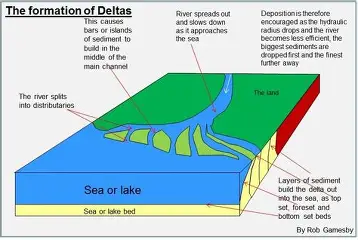
When a river travels from higher land toward the coast, it carries large amounts of sediment. Near its mouth, the river becomes slower and can no longer carry all of these materials. The sediment settles on the riverbed and nearby coastal areas. With continuous deposition over many years, the land gradually grows outward.
How Does a River Delta Form?
The formation of a river delta is a slow natural process. Several conditions are usually necessary. First, a river must carry a significant amount of sediment. Second, the river needs to enter relatively calm water where the sediment can settle. Strong waves or tides can carry sediment away before a delta develops.
As sediment accumulates, the river may divide into several smaller channels called distributaries. These channels spread across the newly formed land and transport water and sediment toward the sea. The continuous movement of water and sediment changes the shape and size of the delta.
Deltas can take thousands of years to develop, although their growth can sometimes happen more quickly when rivers carry unusually large amounts of sediment.
Types of Deltas
There are several types of river deltas, and each has a different shape and formation process. Some are strongly influenced by river deposits, while others are shaped more by waves or tides.
A river-dominated delta forms when the river supplies large quantities of sediment and waves do not remove it quickly. These deltas may have long, narrow distributaries extending into the water.
A wave-dominated delta develops when waves transport deposited sediment along the coast. These deltas often have smoother shorelines than river-dominated deltas.
A tide-dominated delta is strongly influenced by tidal currents. Tides can move sediment back and forth, creating channels and sandbars across the delta.
These different forms show how rivers, oceans, waves, and tides work together to shape Earth’s surface.
Why Are Delta Important?
Deltas are extremely valuable to both nature and people. Their soils are often rich in nutrients because rivers continuously deposit fine sediment. For this reason, many delta regions are excellent areas for agriculture. Farmers may grow rice, wheat, vegetables, fruits, and other crops on fertile delta plains.
Deltas also provide important habitats for wildlife. Wetlands, shallow waters, marshes, and islands can support fish, birds, reptiles, mammals, and many plant species. These ecosystems provide food and shelter for animals while also supporting local communities.
Many large cities and settlements have developed near deltas because of fertile land, freshwater resources, transportation opportunities, and access to coastal trade. As a result, deltas have played an important role in the development of human civilizations.
Famous River Delta Around the World
Several well-known deltas can be found across the world. The Ganges-Brahmaputra-Meghna Delta, located mainly in Bangladesh and India, is one of the largest delta regions on Earth. It contains extensive rivers, wetlands, islands, and coastal ecosystems.
The Nile Delta in Egypt has supported human civilization for thousands of years. Its fertile soil has made the surrounding region an important agricultural area.
The Mississippi River Delta in the United States contains extensive wetlands and coastal habitats. It is also important for fisheries, transportation, and local economies.
Another famous example is the Mekong Delta in Vietnam. The region is well known for rice farming, waterways, fruit production, and diverse ecosystems.
Threats Facing River Delta
Although deltas are naturally changing environments, many are facing increasing pressure. Rising sea levels can threaten low-lying delta communities. Coastal erosion can remove land, while dams and other structures may reduce the amount of sediment reaching the coast.
Human development, pollution, excessive groundwater extraction, and climate change can also affect delta ecosystems. In some areas, land is sinking while sea levels are rising, increasing the risk of flooding.
Protecting delta regions requires careful management of rivers, wetlands, coastal areas, and natural resources. Restoring wetlands and allowing rivers to transport sediment naturally can help maintain healthy delta environments.
Conclusion
A delta is much more than a piece of land at the mouth of a river. It is a dynamic environment created by the interaction of flowing water, sediment, waves, tides, and the sea. River deltas support agriculture, wildlife, communities, transportation, and important ecosystems.
From the Ganges-Brahmaputra-Meghna Delta to the Nile and Mekong deltas, these landscapes demonstrate the power of rivers to shape Earth’s surface. Understanding how deltas form and change is essential for protecting the people, wildlife, and natural resources that depend on them.



Comments are closed.
[…] countries are ranked by total land area, a few nations stand far above the rest. Let’s explore the biggest countries on Earth and discover what makes […]