

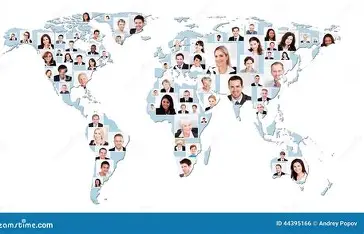

- Why Do People Move From One Place to Another?
What are some reasons why people migrate? It is an important question that has arisen in the field of human geography. Throughout history human beings have migrated from one area to another for various reasons. Some go to seek employment, for a better education, or to be with family. Others flee their homes as a result of climate change, poverty, conflict, or natural disasters.
In the course of the human movement, which can be internal or external to the country, it is also known as migration. Can transform communities, cities, economies, and cultures.
What Is Migration?
Migration refers to the relocating of individuals or populations from one place to another with a plan to stay in that location for some time. Migration may be either seasonal or permanent.
People who relocate to another village or city in the same country are said to make internal migration. International migration is the term given to the movement of people from one country to another.
Seasonal migrations are also possible. Some workers, for instance, go to another region during a specific season for agriculture or temporary work.
Moving for Jobs and Better Opportunities
A big reason for people moving is to find a job. Individuals may migrate from lower economic opportunity areas to urban or other areas with higher economic opportunity.
Job creation in large cities in industry, business, construction, transportation, technology, health care, and services, as well as other areas, can attract workers to these cities.
For instance, individuals can relocate from rural places to big cities in order to find jobs that would pay them more. Such mobility can contribute to urbanization—to make cities bigger and denser.
Education and Healthcare
Another significant factor for migration is education. Learners can transfer to a town/city where universities, colleges, and special schools exist.
Also, the location of health care can impact where people live. Families can sometimes relocate to a city for better proximity to medical facilities such as a hospital, doctors, and specialized facilities.
A combination of these factors demonstrates that migration doesn’t necessarily stem from economic issues. Persons might relocate for the desire for improved services and opportunities.
Moving to Join Family
Family ties may be another reason for people to relocate. Individuals can move in with parents, spouse, children, or other family members.
International migration can lead to families being located in more than one country. One member of the family can relocate first on a job and then assist the other members to relocate.
Migration can also affect family connections, language, culture, food, and traditions as families start to connect with each other from different parts of the world.
Natural Disasters and Environmental Changes
Sometimes people are compelled to leave their home due to natural disasters. Floods, cyclones, earthquakes, droughts, landslides, and river erosion can impact houses, farmland, roads, and other infrastructure.
After a disaster, people living in vulnerable areas may move in temporary relocation. Sometimes they do move out for good if it’s hard to return home in some cases.
Long-term migration can also be affected by environmental alterations. The capacity of people to sustain their livelihoods may be impacted due to changes in water availability, agriculture, and coastal environments.
Political Instability and Conflict
Conflict is a large factor in move reasons. It may be unsafe for people to stay in their own homes because of wars, violence, and political unrest.
Some end up internally displaced, that is, people move internally but do not cross international borders. Others flee across borders and flee to another country.
As part of these movements, people might require community or humanitarian assistance, which could include the need for shelter, food, health, education, and employment.
Rural-to-Urban Migration
There are a lot of countries in the world where people migrate from rural to urban areas. Jobs, education, health care, and other prospects and opportunities can lead people to leave the villages and farming communities to live in cities.
The concentration of increasing populations in cities can lead to a rapid expansion of cities. This phenomenon is called ‘urbanization.’
Growth in the city can have positive consequences as well as negative. Traffic jams, lack of housing, pollution, waste management issues, and strain on public services are potential issues that cities could experience.
International Migration
International migration is a link between countries and communities across the globe. People migrate across borders for work, studies, family, security, and more.
Migrants can make a difference in the country they migrate to through their work, skills, business, and cultural contribution. Meanwhile, they could have significant links with their own countries.
A large number of migrants remit money to family members at home. Such financial transfers, or remittances, can support families to afford food, shelters, education, health services, and more.
How Migration Changes Communities
The migration can have a considerable impact in a place of origin as well as a place of destination.
Rural to urban migration can result in a decline in the rural population. However, there could be a benefit to the family if money is sent home by other relatives that are working elsewhere.
For destination cities/countries, there is the potential to benefit from workers, skills, businesses, and cultural diversity. Migration is a process that may lead to the introduction of new languages, foods, music, traditions, and ideas.
However, high rates of population mobility also place a strain on housing, transportation, schools, health care, and other resources.
Migration and Geography
Geography enables us to explain and to understand why people have to move and where they go. The physical environment can have an impact on settlement and migration, for example, climate, rivers, mountains, deserts, and coastlines.
Human factors are as equally significant. Migration patterns may be influenced by employment opportunities, transportation systems, political environment, education and health, and economic conditions.
Geographers can learn about the connections between human populations and the changing of population over time by studying migration.
Conclusion
What makes man migrate from place to place? There can be no one correct answer. People migrate in search of employment, for education, healthcare, family, safety, and improved opportunities. Other factors can also affect their decision, such as natural disasters, changes in the environment, conflict, and economic factors.
Migration is an inherent characteristic of human geography and has been influential for societies throughout history. Migration will continue to be a key driver of cities, cultures, economies, and communities globally as people move within and across countries.

Comments are closed.
[…] is greatly affected by climate. Moderate climates usually make life easier, as people can engage in agriculture, construction, and daily routines. Permanent settlement can be made harder by very hot environments, […]