

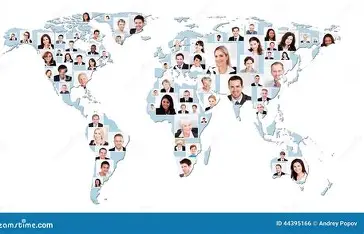

The Study of People and Their Relationship to the World
People and Their Relationship to the World is an important subject in human geography. People and populations are distributed across all continents,
but they are not distributed evenly across the Earth. In some places, millions of people live close together, while other regions have relatively few inhabitants.
Climate, geography, water, jobs, history, and natural resources all influence where people choose to live.
How Many People Live in the World?
Population has increased enormously in the past few centuries all over the world. Medical advances, sanitation, food supplies,
and the quality of life have contributed to the increase in life expectancy and the fall in death rates in many countries of the world.
Now there are billions of people living on the earth. But not all areas experience the same level of population growth.
Some Nations are still dealing with high population growth rates, whereas other Nations have population aging and negative population growth.
The varying population changes impact housing, education, health care, transportation, employment, and natural resources.
Where Do Most People Live?
The distribution of people is not even throughout the world. In areas where living conditions are more favorable, large populations tend to develop.
There is a very high proportion of the world’s population in Asia. Countries like India, China, Indonesia, Pakistan and Bangladesh have large populations.
Many people occupy river valleys, coastal areas, plains and fertile agricultural regions.
Europe also has numerous densely populated regions, especially in the vicinity of the large cities and industrialized areas.
The population is increasing in Africa, where large populations are located in the Nile Valley, West Africa and eastern and southern Africa.
Both North and South America have both very high and very low population density areas. Australia has a smaller population,
with most people living near the eastern, southeastern, and southwestern coasts.
Why Do People Choose Certain Places to Live?
Human settlement is greatly influenced by Geography. Fresh water availability is one of the critical considerations.
Rivers and Lakes are sources of drinking water and help with agriculture and transportation.
Fertile soil additionally allures individuals, as they can carry out agribusiness. For this reason, many large settlements developed near major rivers like the Nile,
Ganges, Yangtze and Mississippi.People and Their Relationship to the World
Climate is important, too. In general, the presence of large populations is more difficult in extremely hot deserts, very cold polar regions and high mountain areas.
Population distribution is also related to economic opportunities. Cityward migration softens occur due to a city’s job opportunities, schools, hospitals, transportation and other services offered.
Cities and Urban Life
Amongst the most essential transformations in the current world is the development of urbanization.
Nowadays, larger populations reside in cities rather than rural communities.
In a city, there are lots of opportunities; however, the growth of the city can at times be a challenge.
All the ills of fast-expanding cities are frequently the same: crowded roads, lack of housing, pollution, trash management, and stress on water supplies.
In big cities like Tokyo, Delhi, Shanghai, São Paulo and Cairo, millions of people reside and work in relatively small areas.
Urbanization is still altering lifestyles. Today, cities are increasingly playing a key role in technology, education, business, culture and transportation.
Different Cultures Around the World
Throughout history, the inhabitants of the world have developed many thousands of cultures. Language, foods, clothing, music,
beliefs and traditions, architecture and celebrations may differ widely from region to region.
These differences have been largely influenced by geography. Communities were isolated from each other for substantial periods of time by mountains,
oceans, deserts, and forests. This led to the creation of different languages, customs and cultures within the groups.
Meanwhile, now more than ever, people are brought closer together by modern transportation and communication.
In today’s world, ideas, food, music, technology and traditions are shared rapidly across the borders of the nation.
Population Movement and Migration
Migration has been an element of human existence from time immemorial. There are lots of reasons for migration.
People migrate either for work, education, or to reunite with families or to pursue a higher standard of living.
Some migrate within their own nation; some migrate across international borders. Migration can also be affected by natural hazards, conflicts,
economic challenges and environmental changes.
Migration can alter the destinations that people move to and the destinations that people move from.
It can introduce a variety of skills, languages, traditions and ideas to various societies.
Challenges of a Growing Population
Having a large and expanding population can be a source of opportunity as well as challenge. More people can contribute to economic activity,
innovation, and cultural development. However, growing populations also increase demand for food, water, energy, housing, and transportation.
Pressure on the environment is another key issue. Human activities may have an impact on deforestation, pollution, habitat loss and climate change.
Therefore, Sustainable Development is beneficial. Countries need to find ways to improve people’s quality of life while protecting natural resources for future generations.
The Future of World Population
World Population in the future will rely on birth rates, death rates, migration, health care, education, and economic conditions.
Population aging and population decline may occur in some countries while population growth may occur in others.
All these differences will impact economies, cities, workplaces and government services.
Technology could also alter people’s lifestyle. Vehicle and communications technologies, health and agriculture systems have the capacity to address future challenges through improvements.
Conclusion
Geography is closely related to the world population and people: Physical and human factors shape the location, mobility and usage patterns of people.
Humans are found in a variety of different environments, from very densely populated cities and fertile river valleys to remote islands and mountain communities.
The study of the world’s population is not only useful for comprehending the distribution of people, but also for understanding human societies and their relationships with the earth.
These connections will be even more critical in the future in order to build a more healthful, sustainable future for communities globally as the population continues to evolve.

Comments are closed.
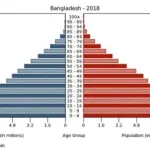
[…] Bangladesh, there are various types of environments in which the people live. Major population centers are found in the central and eastern regions of the nation, where cities, industries, roads […]