


What Effect Do Glaciers Have on the Earth?
What Are the Effects of Glaciers on the Earth’s Surface?
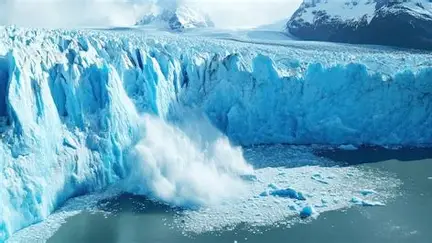
A glacier is basically a huge river of ice that creeps, crawls, or moves across the land. Glaciers might move much slower than rivers or strong winds,
but over thousands of years, they can drastically change mountains, valleys, and landscapes. As they flow, glaciers reshape the landscape—washing away rocks,
carrying sediment along, cutting out valleys, and leaving behind features that can be still to see years after the glacier has melted.
So, glaciers are a major part of Earth’s natural processes. They don’t just store massive amounts of freshwater—they also help shape the surface of our planet.
What Is a Glacier?
A glacier is a mass of ice that forms when snow built up over many years turns into ice.
Glaciers usually form in places where snowfall stays for a long time. As more snow falls, the snow underneath gets compacted.
Over many years, that snow eventually turns into dense glacial ice.
Once the ice gets thick enough, it can flow slowly downhill or sideways. It’s this movement that affects the landscape—that’s how glaciers change the land.
What’s the Movement of Glaciers Like?
Even though glaciers look like frozen, still rivers, they are actually moving! Some glaciers move only a few centimeters a day; others can move quite a bit faster.
One of the main forces that drives glacier movement is gravity. The ice is so heavy that when it moves over the land, it does so very slowly.
The glacier might slip over solid rock, through a valley, or across flat terrain. As it travels, the ice picks up rocks and sediment.
That slow speed makes glaciers very powerful when it comes to modifying the Earth’s surface.
How Do Glaciers Wear Down the Land?
Erosion is one of the most significant ways glaciers modify the Earth.
There are really two ways glacial erosion happens: abrasion and plucking.
Plucking
Plucking happens when glacier ice freezes to the rock below it. As the glacier flows, it can rip fragments of rock off the underlying surface.
Over time, this process can break away large quantities of rock and change the topography.
Abrasion
Rocks and sediments are frozen to the bottom of the glacier; they get dragged against the ground and scrape the rock, creating abrasion features.
This process is kind of like sandpaper being dragged in slow motion across a surface. The rocks moving down the glacier rub against the bedrock and slowly wear it down.
Plucking and abrasion work together to form deep valleys and mold mountains.
How Do Glacial Valleys Form U-Shaped Valleys?
A good example of a U-shaped valley formed by glacial erosion can be found.
A river may form a narrow V-shaped valley before a glacier moves through it. If a glacier fills the valley, it can wear down the valley sides and valley floor because of its great weight.
The glacier forms a wide and deep valley as it travels down the hillside. When the glacier recedes, it may leave behind a wide, flat-bottomed valley with steep sides.
Many mountainous areas around the world have these U-shaped valleys.
In What Way Can Glaciers Help Shape Mountains and Peaks?
Glaciers can also change the shape of mountains.
If glaciers flow down opposite sides of a mountain, they can form deep valleys on its sides. Eventually,
multiple glaciers can cut into the mountain from various angles.
This erosion may result in sharp mountain tops and steep ridges.
Sometimes a mountain with a point at the top and a number of glaciers around its sides is called a horn.
A common example of glaciated mountains is the famous Matterhorn in the Alps.
How Do Glaciers Move Rocks?
Glaciers are giant, natural moving belts.
During ice movement, rocks, soil, and sand, along with other sediment, can be carried along with the ice.
These materials transport a great distance by the glacier.
As the glacier melts or recedes, the sediments are left in a different place.
When this material is directly deposited by the glacier, it’s known as glacial till. It may include a combination of clay, sand, gravel, and big rocks.
These deposits may affect the landforms and morphologies of the surrounding land.
What Are Moraines?
Moraine: a ridge or deposit of material left by a glacier.
Moraines are found on the sides, center, or front of a glacier.
Forward movement of a glacier involves pushing and transporting sediments. If the glacier doesn’t continue to advance but starts to melt instead,
it could leave behind a rock and sediment moraine.
These deposits give scientists valuable hints about the maximum extent of a glacier.
Do Glaciers Form Lakes?
Yes. Glaciers can alter the shape of the land, forming lakes.
As a glacier cuts into the Earth, meltwater accumulates in the corresponding depression in the ground.
In other instances, a natural barrier from glacial sediment can be used to retain water.
Lots of lakes create these processes in mountain areas and in areas that used to be glaciers.
Glacial history is apparent in some lakes (steep valleys and rocky surroundings).
Sea Level and Glaciers
Glaciers also influence sea level by holding water on the land in the glaciers as ice.
As glaciers and ice sheets on land melt and other ice is lost, some of this water finds its way into the oceans. This has an impact on sea level.
It’s distinct from the melting of sea ice. Floating sea ice isn’t just displacing seawater; melting land ice is adding more water to the sea.
Glaciers are carefully studied by scientists, as their size and movements can tell them important clues about the changing climate of Earth.
What Is the Importance of Glaciers?
Glaciers are significant in a number of ways. They contain freshwater, mold landscapes, affect ecosystems, and serve to regulate components of the Earth’s climate system.
Glacier meltwater in some area’s feeds into rivers and/or is used by communities, agriculture, and ecosystems.
Glaciers also contain valuable information about Earth’s past. Air bubbles or other matter may be trapped in such layers of ice,
which aid in the study of the conditions in the ancient atmosphere.
Final Thoughts
What effect do glaciers have on the Earth? The modification of the planet by glaciers is primarily in the areas of erosion, transport, and deposition.
These vast masses of ice erode and change the landscape, scour the rocks, migrate, and deposit sediment.
The details of how glaciers affect the landscape can be observed in many regions of the world, including U-shaped valleys, sharp mountain peaks, moraines,
and glacial lakes—all evidence of ancient and modern glacier action.
Glaciers move very slowly but can have a massive effect on the Earth. These rivers of ice can change the landscape completely over thousands of years and leave behind some of the most amazing landscapes on our planet



Comments are closed.
[…] has increased enormously in the past few centuries all over the world. Medical advances, sanitation, food […]